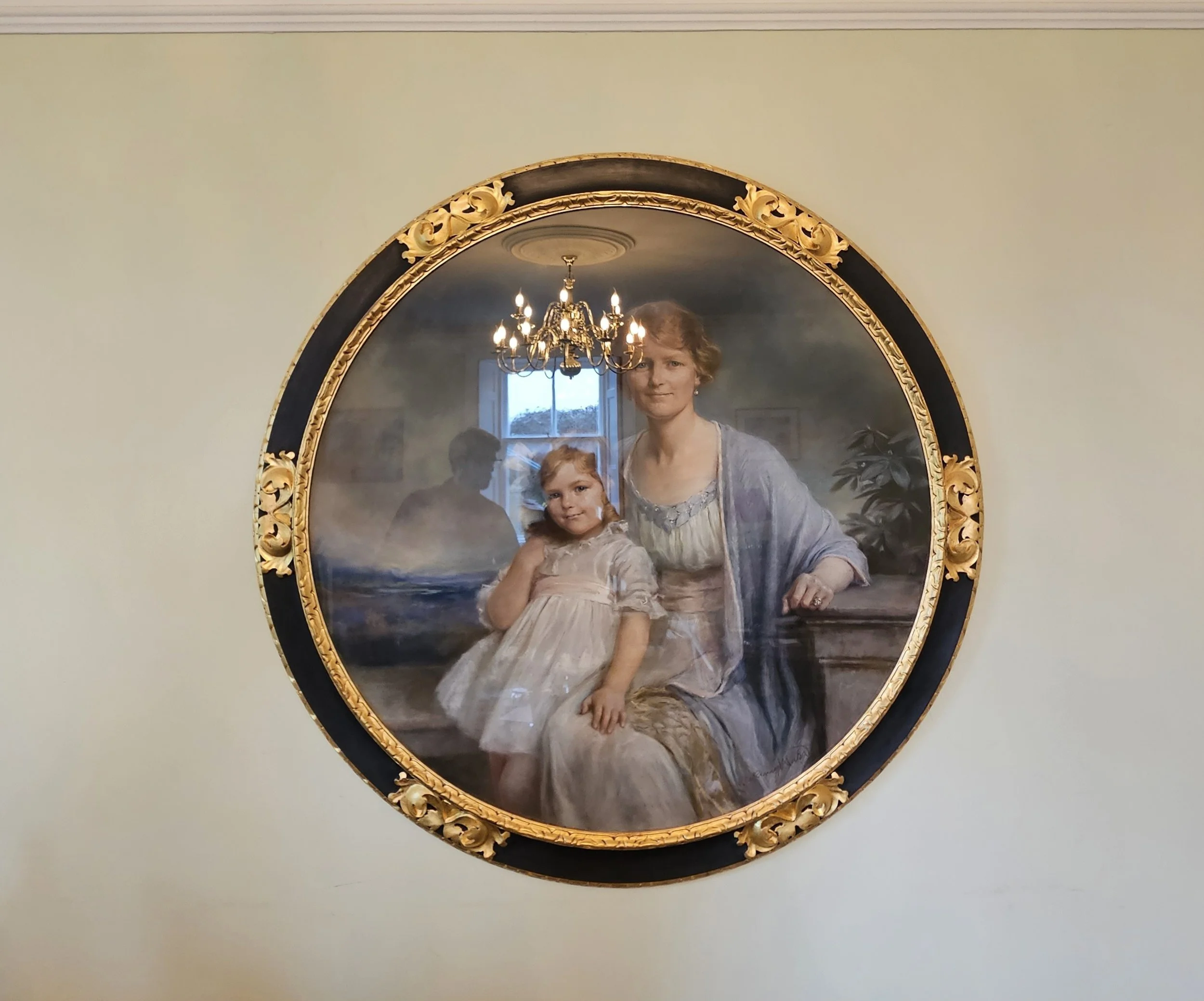
Restoration of an early 20thC Frame
The Leviathon. A lesson in knowing when to stop.
Task; to repair and restore an Early 20th Century circular frame. Initial condition; flaking paint, cracked joints, little to no gold remaining on the beading and ornamentation.
Further task; to create suitable hanging system within client’s home to enable safe hanging of the painting & frame which all in all weighed 35kg.
And all work to be done under a very specific time constraint of 6 weeks, as it was to be complete and hung back up for a special birthday. That of my client. Particularly meaningful in that two of the sitter’s in the portrait were their mother and Grandmother.
Needless to say I worked to the wire on this one.
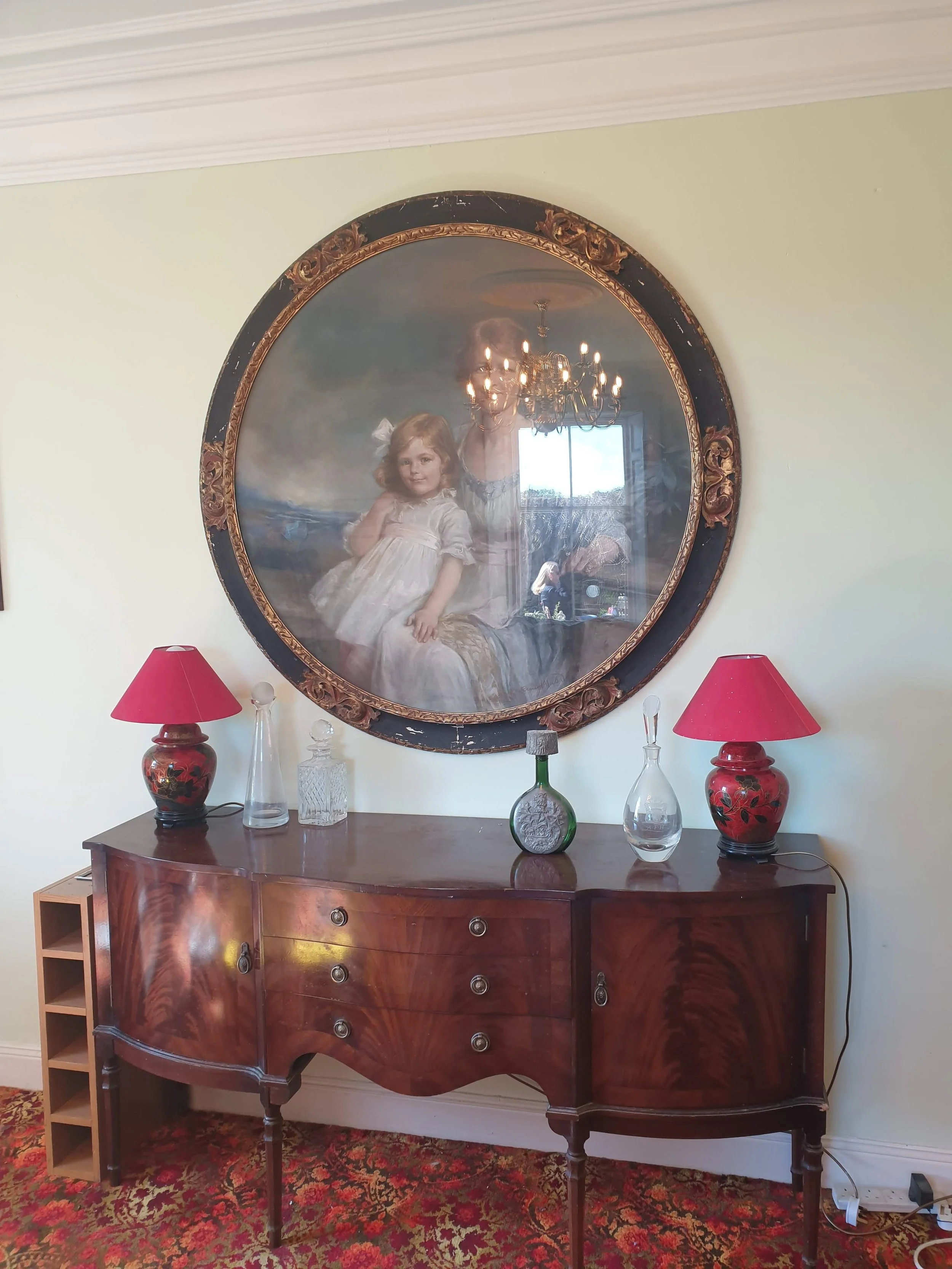
The Frame hanging pre restoration. Note the dull gold and cracking and flacking paint. I actually got the hanging underway first because the real time would be taken by the restoring
Every restoration project has its fair share of suprises and U turns so I’m going to start this synopsis off by giving a quick overview of the things that I found most disturbing about this project and the things I did not foresee…
opening the back of the frame to find- rather than just the painting or backing board- a large pane of broken glass, taped together, sandwiched against the priceless artwork.
once said broken pane of glass is removed without causing further distress or damage, finding that the glazing proper- is 5mm thick weighing more than the entire ornate frame and took a considerable amount of careful effort to remove
finding the joins in the circular frame were causing considerable movement and therefore cracking in the existing gesso and paint.
Making the difficult and painful decision to remove the backing panels which had been placed over the joins to hold them together, force the joins even further apart and fill with epoxy glue and clamp for 24hrs.
….. x many joins
Discovering that there was some kind of car body filler under the gesso coat, so making the painful decision to strip it off and essentially start from a scratch base gesso coat so I knew what I was working with
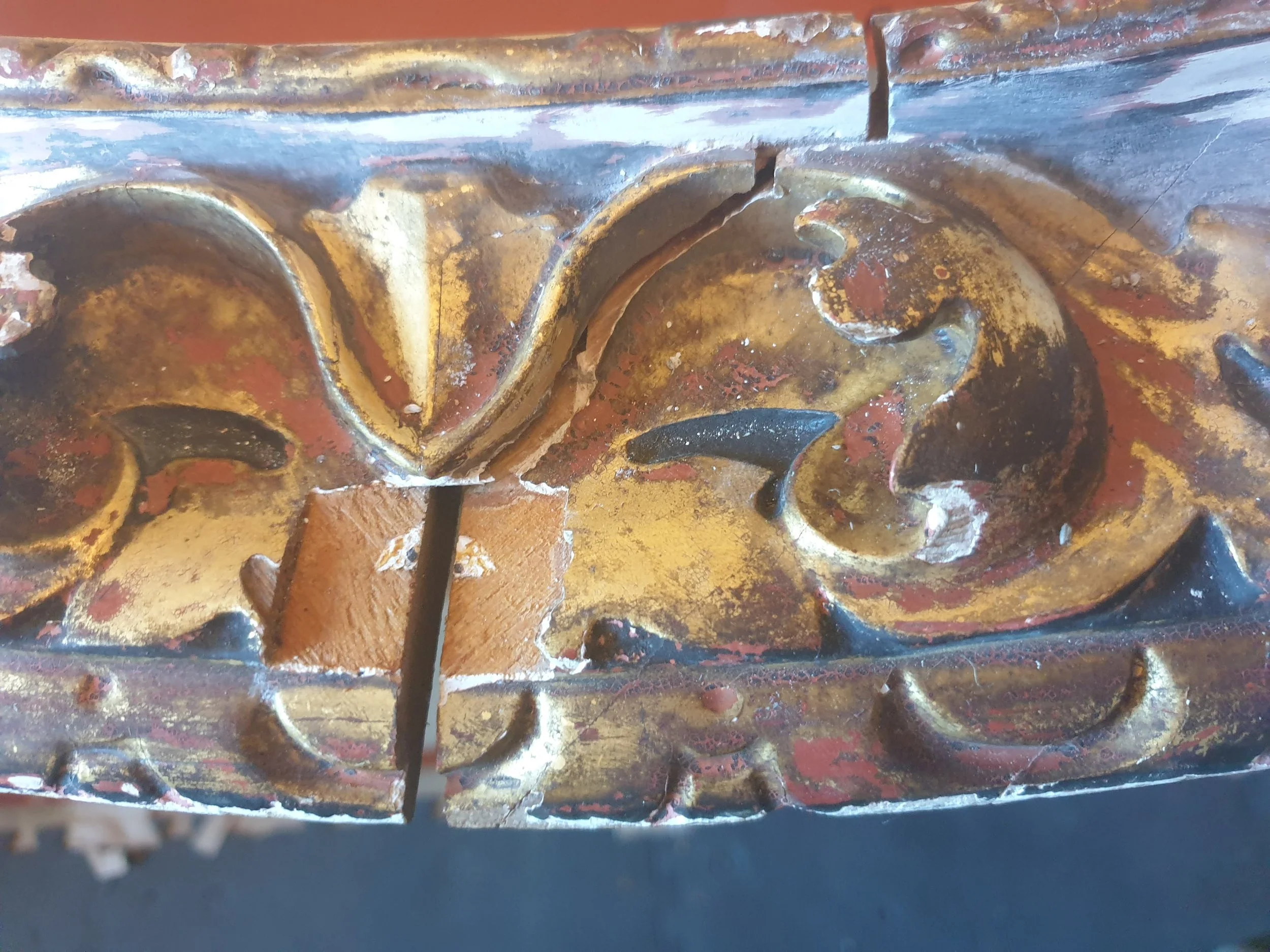
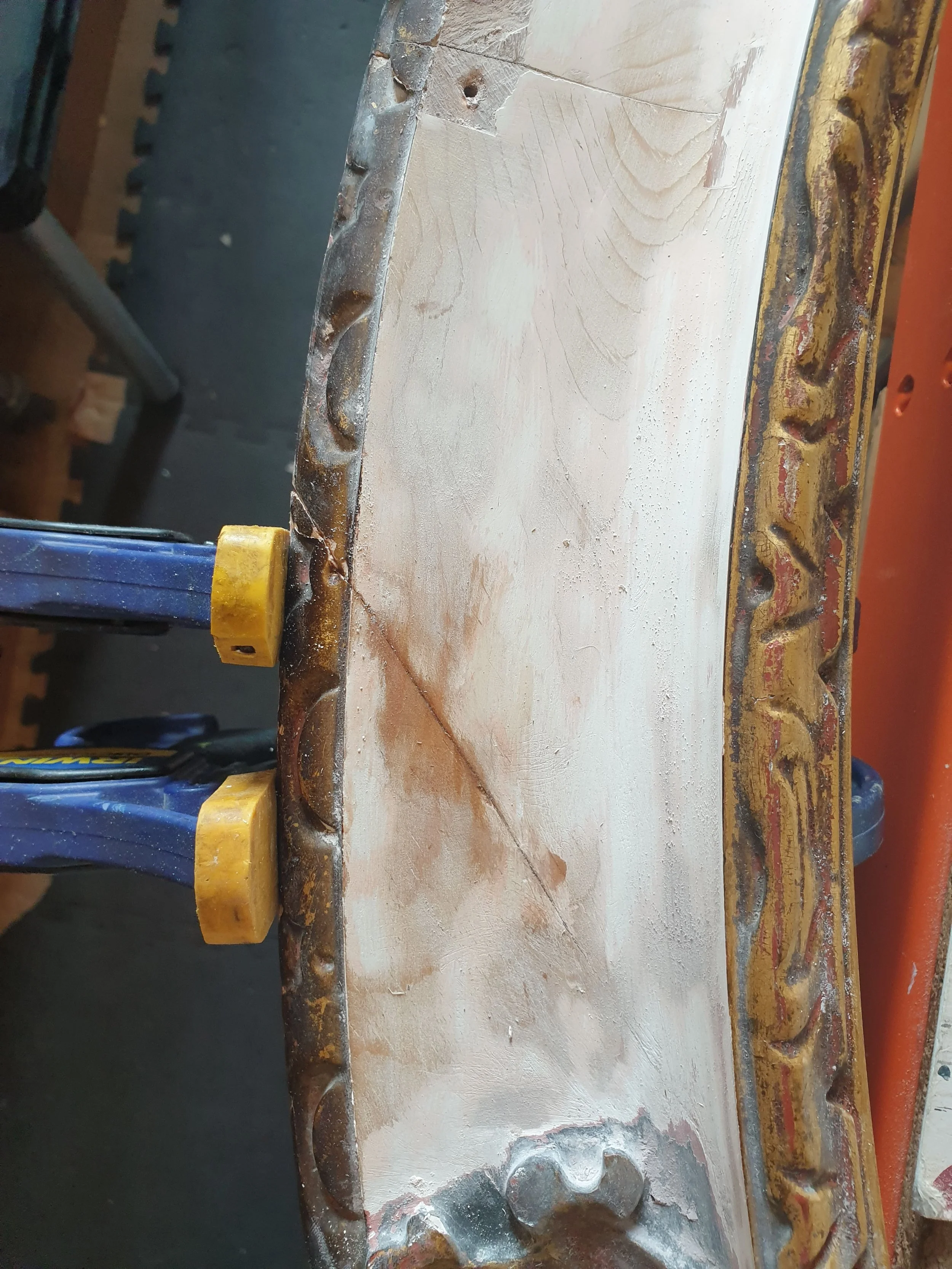
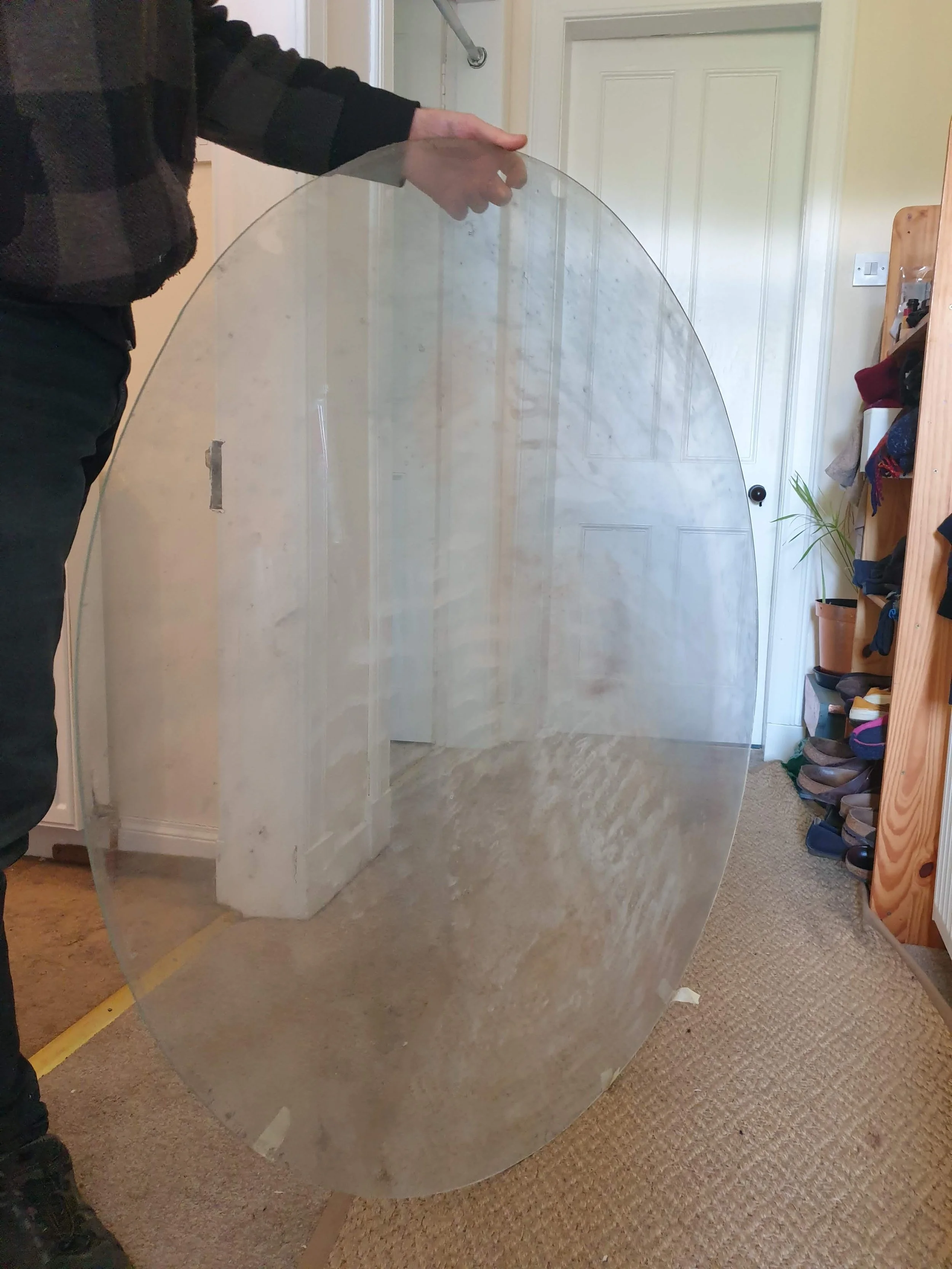
See, now I’m looking at that it doesn’t seem so awful. It’s that fear you will do irreversible damage to something while trying to fix something that I have a problem with. I’m sure you understand.
That’s why you follow steps to make sure the terrible things don’t happen.
So off came the layers of flaking paint, old gesso and…. car body filler.
And on with fresh layers of gesso, ornamentation repairs and beading repairs
Ornament and beading repairs were refreshed and finished with light coat of gesso and red bole before being gilded with 24ct gold.
while the main body, having had all the layers of gesso sanded nicely, red bole was then applied, sanded lightly before black bole was applied in layers and polished to a shine.
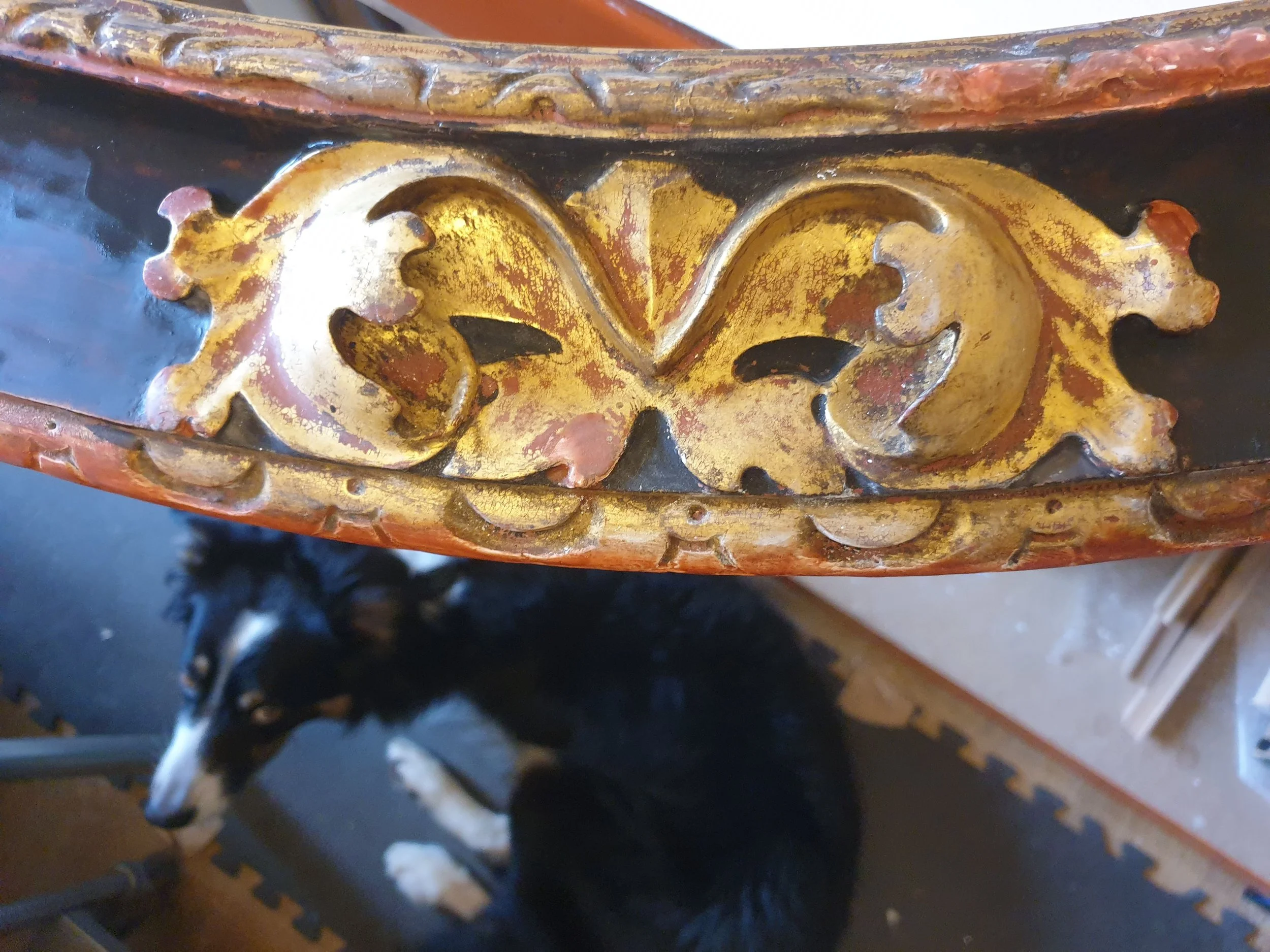
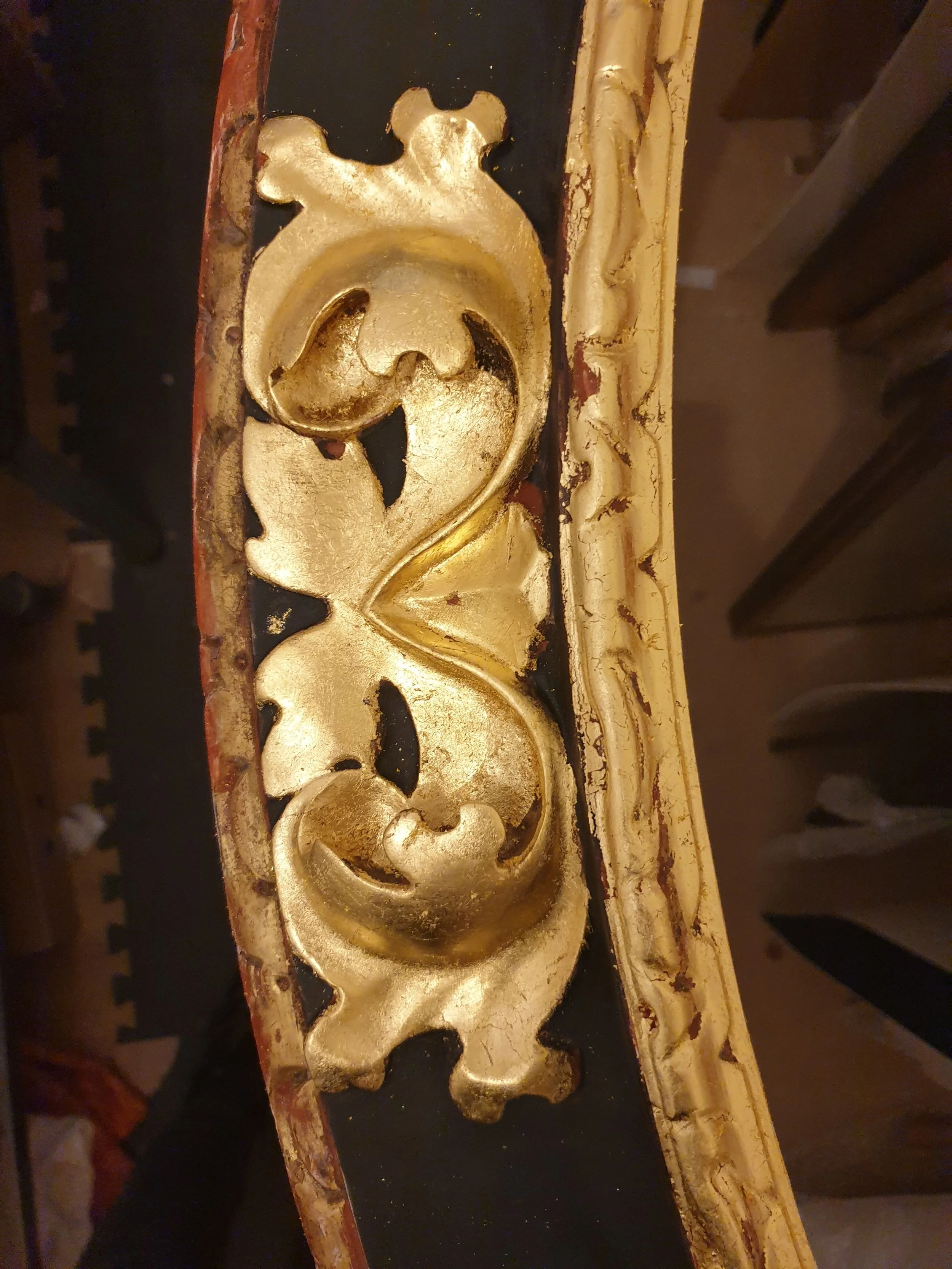
Before everything could go back together, the glass was cleaned and a 5mm spacer was fitted inside to keep the pastel art from transferring onto the glass in future. Also the backing board was replaced with conservation grade backing to help reduce the overall weight of the framed piece- (although since one of the panes of glass was removed from inside- that was essentially job done).
But to be fair- that wasn’t it. And it wasn’t just plain sailing. Because like Chekov’s gun- if you introduce the idea, however casually, that one should follow the steps in order that terrible things don’t happen; you probably know they inevitably did.
And yes, something did. Like I say I worked to the wire on this. My client was actually sitting outside in a van waiting to collect while I was finishing up.
And I am something of a perfectionist and it can be crippling. I recently read about this 80/ 20 rule. For 80% of the work you do only 20% will be noticed. It is actually quite helpful. A guide to know when to take a step back. What happened is that I didn’t know when to step back because I kept seeing the tiny details. I kept feeling the need to touch up. In doing this I managed to drip some bole onto part of the surface and it pooled, so when I polished it, it took it straight through to the gesso. It was too late to do much about this. Because like I say, my client was waiting. I touched it up with a small bit of black Koelner casien (which dries faster), explained the problem and sent it on it’s way.
I had some knots in my stomach and sleepless nights but I had explained that I would come and fix it.
In fact my client didn’t notice it.
Pictured below is the frame hanging on the wall the day we went over to polish and fix the repair in Kingsbarnes. Looking, dare I say- a lot healthier than it had the first time I encountered it. And hopefully for many more years to come.